Somewhere in my second year of college I picked up the phrase hustle culture. The pitch is simple: lock in, work unreasonably hard and fast, retire in your thirties.
I have two questions about that, and neither is rhetorical.
Do you really want to sprint through a vocation you are trying to be finished with? Is a life worth living if its only aim is to stop working?
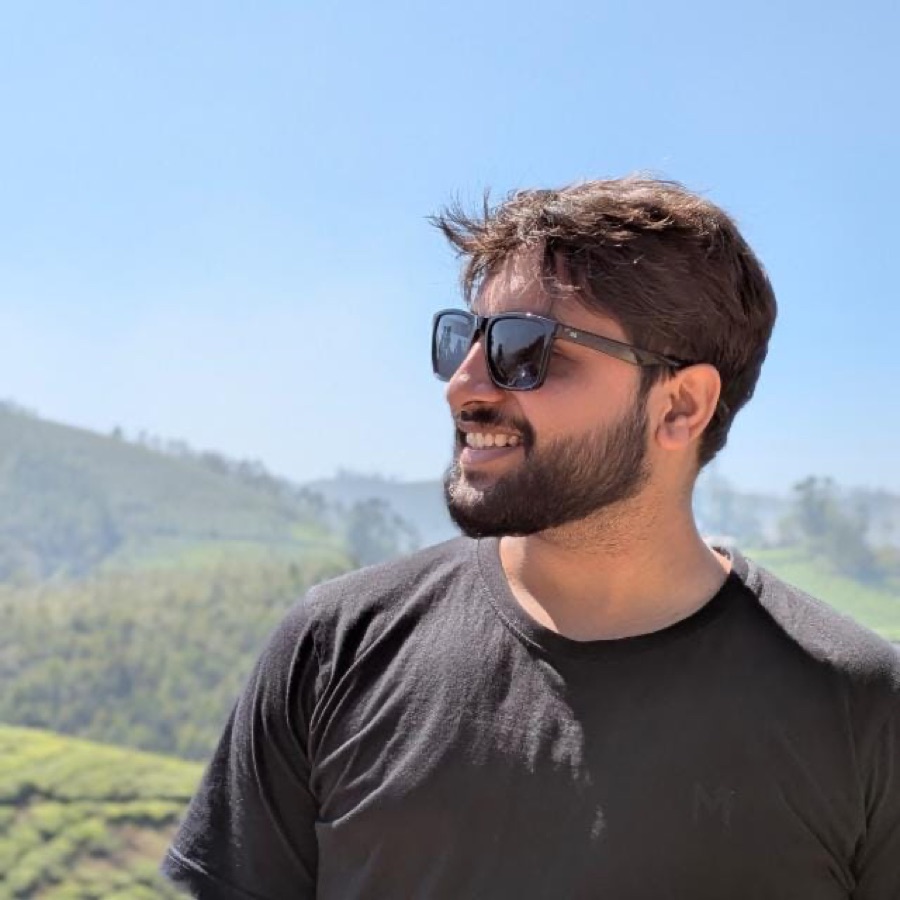
That photograph is from Munnar. I spent seven days in Kerala with my parents, a gift for their twenty-fifth anniversary, paid for out of what I had earned from work.
I mention it because it is the clearest example I have of what I think the money is actually for. You do not earn in order to survive, and you do not earn in order to accumulate. You earn for the quiet of having put people somewhere they would not otherwise have been, together. That is the return I care about.
The obvious objection
You could reasonably point at the Palangtodh Sprint and ask what I am talking about. Three days without sleep is not exactly balance.
But the aim was never to get the sprint over with. The kick of being inside it was the whole reason we did it. We moved fast so we could reach the next one, not so we could be done with projects for good. That is a different thing from grinding toward an exit.
There is a saying where I am from: khaali dimaag shaitan ka ghar. An idle mind is the devil's workshop. It is usually said to children as a warning against boredom, and I think it is half right. Idleness is corrosive. But the cure is work you want to be inside, not work you are racing to escape.
Why I think life is like mathematics
Mathematics is the language the universe is written in, and it has a property I keep noticing: every chapter turns out to be a tool for the next one.
As a child I thought sums and differences were all there was. Then multiplication arrived and proved me wrong. Then it became clear that arithmetic was really there to let you do algebra. Then algebra turned out to be a tool for geometry. Geometry became a tool for trigonometry.
When trigonometry showed up I finally thought: this is it, this is the peak, everything so far was practice for this. I was wrong again. The further you go, the more obvious it becomes that every concept is scaffolding for a larger one, and there is no final chapter where the tools stop being tools.
Life reads the same way. Every project, every decision, every stretch of work is a stepping stone, or more precisely a tool, for becoming a better version of yourself. Which is exactly why optimising for the moment the work stops is the wrong objective. There is no last chapter. There is only the next tool.